Studded Tire and Chain Laws in All 50 States (Winter 2026–27)
30 states and Washington, DC allow studded tires only in a winter season, most often from October or November to April. 9 states set no season, and 8 ban them or allow them only for a few vehicles: Hawaii, Illinois, Louisiana, Maryland (outside five western counties), Michigan (in practice), Minnesota, Mississippi and Wisconsin. Chains are legal almost everywhere when roads are slippery, and mountain states such as California, Colorado, Oregon, Utah, Washington and Wyoming can require chains or winter-rated tires by road sign.
The quick rule
- Studded tires: legal in a winter season in 30 states and DC, with no season in 9 states, banned or nearly banned in 8. In 3 states (Kentucky, New Hampshire, Texas) we found no clear state rule: ask the state police before you buy.
- Studless winter tires and all-weather tires with the mountain-snowflake symbol are legal in every state, all year.
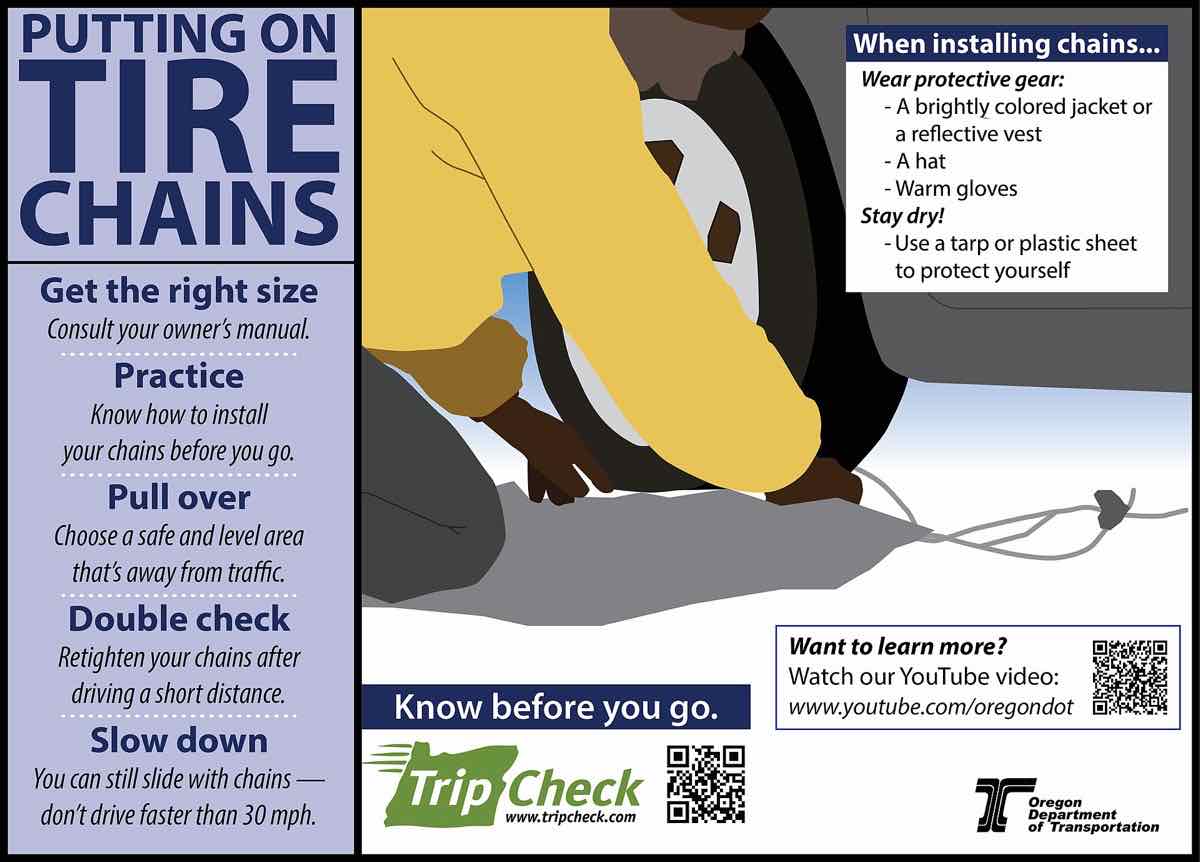
- Chains: legal in nearly every state when the road is snowy or icy, and required by sign on some mountain roads.
Studded tire and chain rules by state
| State | Studded tires | Chains and traction rules | Official source |
|---|---|---|---|
| Alabama | Allowed only when needed for snow or ice (Code §32-5-210) | Allowed when needed for safety | Code of Alabama |
| Alaska | North of 60°N: Sep 16 – Apr 30. South of 60°N: Oct 1 – Apr 14. Spring deadlines are often extended by emergency order. $5 fee per studded tire | Same seasons as studs on paved roads | Alaska DMV |
| Arizona | Oct 1 – May 1 | Allowed in snow or ice. No statewide chain mandate; ADOT recommends chains or 4WD on snowy highways | A.R.S. §28-958 |
| Arkansas | Nov 15 – Apr 15. Fine $25–$50 outside the season | Allowed when needed for safety | A.C.A. §27-37-402 (ArDOT) |
| California | Nov 1 – Apr 30 (CHP can extend). Studded tires do not count as chains under chain controls | Chain controls R-1, R-2 and R-3 on mountain roads | Caltrans |
| Colorado | Allowed all year on passenger vehicles, studs up to 1/16 in | Traction Law: on I-70 Dotsero–Morrison every Sep 1 – May 31, elsewhere when posted. Tires with 3/16 in tread rated winter, all-weather or M+S, or chains/AutoSock. Since 2025 also for 4WD and AWD. Chain Law: every vehicle chains | CDOT |
| Connecticut | Nov 15 – Apr 30 | No chain-control law found | C.G.S. §14-98 |
| Delaware | Oct 15 – Apr 15 | Allowed when needed for safety | 21 Del. C. §4302 |
| District of Columbia | Oct 15 – Apr 15 (18 DCMR §732) | No rule found | DC Municipal Regulations |
| Florida | No state ban: §316.299 exempts studded tires designed not to damage the road | No chain rule in state law | Fla. Stat. §316.299 |
| Georgia | Allowed only when needed for snow or ice (§40-8-74) | When GDOT restricts roads for winter weather, signs can require chains, 4WD with suitable tires or snow tires | Georgia DPS |
| Hawaii | Banned, except on the Mauna Kea access road above Hale Pohaku | Removable chains allowed | HRS §291-33 |
| Idaho | Oct 1 – Apr 30 | ITD can require chains on commercial vehicles on Lookout Pass, Fourth of July Pass and Lolo Pass | Idaho Code §49-948 |
| Illinois | Banned, except rural mail carriers and some disability-plate owners on rural roads (Nov 15 – Apr 1) | No chain-control law found | 625 ILCS 5/12-401 |
| Indiana | Oct 1 – May 1 | Legal when required for safety (State Police) | IN.gov |
| Iowa | Nov 1 – Apr 1 (school buses and fire trucks any time) | Allowed when needed for safety | Iowa Code §321.442 |
| Kansas | Nov 1 – Apr 15 (K.A.R. 36-7-1) | Allowed on snow and ice | K.S.A. 8-1742 |
| Kentucky | No state rule found; ask Kentucky State Police | Chains are illegal on roads not covered with ice (KRS 189.190) | KRS 189.190 |
| Louisiana | Banned (R.S. 32:362 has no exception for studs) | Allowed when needed to prevent skidding | La. R.S. 32:362 |
| Maine | Oct 2 – Apr 30 | No chain-control law found | 29-A M.R.S. §1919 |
| Maryland | Banned, except cars registered in Allegany, Carroll, Frederick, Garrett or Washington County, Nov 1 – Mar 31, while driven in those counties | No chain-control law found | Md. Transp. §22-405.2 |
| Massachusetts | Nov 1 – Apr 30. Fine up to $50 | No chain-control law found | MassDOT |
| Michigan | In practice not legal: allowed only if they meet a road-wear standard, and State Police say that in practice they are not | No chain-control law found | Michigan State Police |
| Minnesota | Banned, except short visits by non-residents and permitted rural mail carriers | Allowed when needed for safety | Minn. Stat. §169.72 |
| Mississippi | Banned (§63-7-67 has no exception for studs) | Allowed in snow or ice | Miss. Code §63-7-67 |
| Missouri | Nov 1 – Mar 31 | No chain-control law found | RSMo 307.171 |
| Montana | Oct 1 – May 31 | MDT can require chains or traction devices by sign; trucks towing trailers must carry them on passes Oct 1 – Apr 30 | Montana DOT |
| Nebraska | Nov 1 – Apr 1 | No chain-control law found | Neb. Rev. Stat. §60-6,250 |
| Nevada | Oct 1 – Apr 30 | Where signs require it, vehicles up to 10,000 lb need chains, traction devices or snow tires; some Lake Tahoe routes allow only 4WD/AWD with snow tires, or chains | NDOT |
| New Hampshire | No state rule found; ask the NH Division of Motor Vehicles | No rule found | NH DMV |
| New Jersey | Nov 15 – Apr 1 (N.J.A.C. 13:20-15.2) | No chain-control law found | NJ MVC |
| New Mexico | Allowed when conditions require (NMSA 66-3-847); no season | Allowed when conditions require | NMSA 66-3-847 |
| New York | Oct 16 – Apr 30 | No chain law for passenger cars found | VTL §375 |
| North Carolina | Allowed all year, studs up to 1/16 in | Allowed when needed for safety | G.S. 20-122 |
| North Dakota | Oct 15 – Apr 15. $20 fine outside the season | No mandatory chain law (Highway Patrol) | ND Highway Patrol |
| Ohio | Nov 1 – Apr 15 | Allowed on snow or ice | R.C. 5589.081 |
| Oklahoma | Nov 1 – Apr 1, only on vehicles rated up to 2 tons | Allowed when needed for safety | 47 O.S. §12-405 |
| Oregon | Nov 1 – Mar 31 (ODOT can change it in some areas). Fine of nearly $200 outside the season | "Chains required" signs: vehicles up to 10,000 lb not towing may use traction tires instead; heavier or towing vehicles chain | ODOT |
| Pennsylvania | Nov 1 – Apr 15 (the Governor can extend) | Only during snow and ice emergencies; under PennDOT Tier 3 restrictions commercial vehicles need chains | 75 Pa.C.S. §4525 |
| Rhode Island | Nov 15 – Apr 1 | Allowed when needed for safety | R.I.G.L. §31-23-20 |
| South Carolina | Allowed all year, studs up to 1/16 in | Allowed when needed for safety | S.C. Code §56-5-5040 |
| South Dakota | Oct 1 – Apr 30 | Some Black Hills roads may require chains, studded or snow tires | SDCL 32-19-3 |
| Tennessee | Oct 1 – Apr 15, not on vehicles over 9,000 lb (except school buses and emergency vehicles) | No chain-control law found | T.C.A. §55-9-106 |
| Texas | No clear rule: metal parts on tires are banned unless they do not damage the road. Ask Texas DPS before using studs | Allowed when needed to prevent skidding | Transp. Code §547.612 |
| Utah | Oct 15 – Mar 31 | Traction Law by sign. Big and Little Cottonwood Canyons: 5/32 in tread; 2WD need mountain-snowflake (3PMSF) tires, 4WD/AWD M+S or 3PMSF; otherwise chains. Can be enforced 24 hours before a storm | UDOT |
| Vermont | Allowed all year (no season in state law) | Trucks over 26,000 lb must chain on VT Route 9, Bennington–Wilmington, when activated ($1,000 fine) | Vermont DMV |
| Virginia | Oct 15 – Apr 15, vehicles up to 10,000 lb | Allowed | Va. Code §46.2-1044 |
| Washington | Nov 1 – Mar 31. $5 fee per new studded tire. Studded tires do not count as chains | Pass signs: "Traction tires required" (1/8 in tread, M+S, all-season or snowflake) or "Chains required" (4WD/AWD under 10,000 lb exempt with traction tires and chains carried). Vehicles over 10,000 lb carry chains Nov 1 – Apr 1 on set routes | RCW 46.37.420 |
| West Virginia | Nov 1 – Apr 15, not on tires inflated above 40 psi (except school buses) | Allowed when needed for safety | W. Va. Code §17C-15-37 |
| Wisconsin | Banned, except emergency vehicles, school buses, mail vehicles and out-of-state cars passing through (up to 30 days), Nov 15 – Apr 1 | Allowed in snow or ice | Wis. Stat. §347.45 |
| Wyoming | Allowed (studs designed not to damage the road) | Chain law by sign. Level 1: chains, snow tires or AWD. Level 2: chains, or AWD with M+S or all-weather tires. $250 fine, $750 if it causes a road closure | WYDOT |
Mountain roads: chain and traction laws
- California: chain controls R-1, R-2 and R-3 on mountain highways. What each level means.
- Colorado: the Traction Law is always on for I-70 between Dotsero and Morrison from September 1 to May 31. Since 2025 it also covers 4WD and AWD vehicles: they need tires with 3/16 inch of tread rated winter, all-weather or M+S, or chains.
- Utah: Big and Little Cottonwood Canyons need tires with 5/32 inch of tread: mountain-snowflake tires on 2WD vehicles, M+S or mountain-snowflake on 4WD and AWD. UDOT can enforce it up to 24 hours before a storm.
- Washington: pass signs say "traction tires required" or "chains required". 4WD and AWD vehicles under 10,000 lb are exempt from chaining if they have traction tires and carry chains.
- Oregon: on "chains required" roads, cars and light trucks that are not towing may use traction tires instead of chains.
- Nevada and Wyoming: signs set the requirement; Wyoming fines $250, or $750 if the violation causes a closure.
What changed for winter 2026–27
- Colorado: the 2025 Traction Law update (SB25-069, in effect since August 6, 2025) ended the exemption for 4WD and AWD vehicles with worn or summer tires.
- Utah: this is the second winter of the stricter Cottonwood Canyons tire rules from HB 196 (2025).
- Washington and Oregon: no change to the studded tire seasons. Washington still charges $5 for each new studded tire.
- Alaska: the spring removal date was extended by emergency order in 2023 and 2024; watch for a notice before you remove studs.
Before you buy winter tires
- Look for the mountain-snowflake symbol on the sidewall. M+S alone means mud and snow, not a tested winter tire (how to read a tire sidewall).
- Check tread depth: Colorado asks for 3/16 inch, Utah's canyons 5/32 inch, Washington 1/8 inch (how to measure tread).
- Buy chains that fit your exact tire size and check your owner's manual: some cars allow only certain chains or textile socks.
- Book the swap before the first snow, and ask whether the shop can store your other set.
Find a tire shop
Every state's tire shops, with phone numbers, websites and directions: find tire shops by state.
Frequently asked questions
When can I put studded tires on?
It depends on the state. Most seasons start in October or November and end in late March or April (Montana runs to May 31): for example November 1 to March 31 in Washington and Oregon, November 1 to April 30 in California, October 1 to April 30 in Nevada and Idaho. Check your state in the table; using studs outside the season can bring a fine.
Which states ban studded tires?
Hawaii (except the Mauna Kea access road), Illinois, Louisiana, Minnesota, Mississippi and Wisconsin ban them for ordinary drivers, with narrow exceptions such as rural mail carriers. Maryland allows them only for cars registered in five western counties, and Michigan State Police say that in practice they are not legal.
Are studded tires legal in Florida?
Florida law has no studded tire ban: section 316.299 bans roughened wheels but expressly exempts studded tires designed not to damage the road. Many tire websites say Florida bans them; the statute text does not.
Do studded tires count as chains?
Not in California or Washington: Caltrans and Washington law say studded tires do not meet a chain requirement. Where a sign says chains are required, carry chains even if you have studs.
What tires meet the Colorado Traction Law?
Tires with at least 3/16 inch of tread that are winter tires (mountain-snowflake symbol), all-weather tires or M+S tires. Since the 2025 update this applies to 4WD and AWD vehicles too. Otherwise you need chains or an approved alternative such as AutoSock. On I-70 between Dotsero and Morrison the law is in effect every September 1 to May 31.
Is it legal to drive with chains on a dry road?
Usually not. Most states allow chains only when snow or ice makes them needed, and Kentucky bans chains on roads not covered with ice. Take them off when you reach clear pavement.
Related guides
- California Chain Controls Explained: R1, R2, R3 and Winter Tires — What R-1, R-2 and R-3 chain controls mean, when snow tires or 4WD are enough, the 6/32 inch tread rule and how to prep for a Tahoe trip.
- When to Replace Tires: Tread Depth, the Penny Test and California Law — California's legal minimum is 1/32 inch, but wet grip fades long before. The penny and quarter tests, wear bars and other reasons to replace.
- Tire Pressure Light On? What the TPMS Warning Means and What to Do — A steady TPMS light means a tire is low; a flashing one means a system fault. How to check pressure, find the right psi and handle cold mornings.